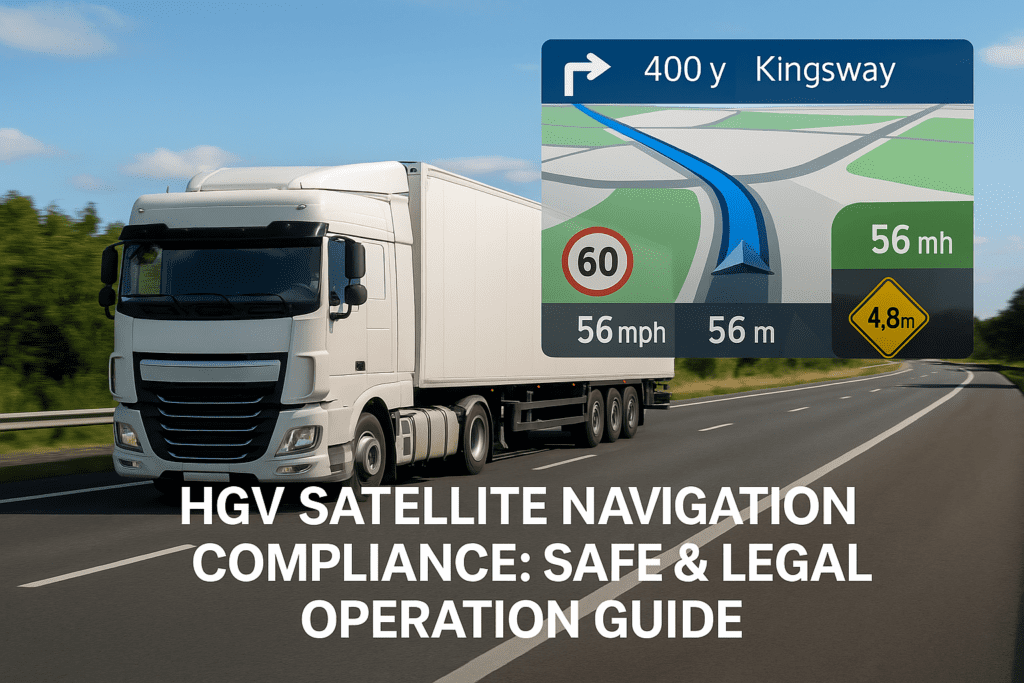
Smart Navigation, Safe Operation, Stay Updated.
Satellite Navigations systems (here after referred to as Sat Nav’s) are a significant part of modern driving. In fact, Sat Nav’s have been introduced into the UK driving test, where the “learner” driver is expected to follow its directions safely without being distracted.
Sat Nav systems are increasingly integrated into a vehicle’s onboard media unit by manufacturers, though standalone devices remain widely used. They offer significant benefits to most road users, supporting environmental efficiency, helping drivers stay on route, and reducing the likelihood of becoming lost.
By displaying upcoming roads and junctions, Sat Navs make unfamiliar routes easier to navigate, improving lane selection and guiding drivers along the most direct and environmentally friendly path,
Sat Nav equipment comes into its own when it comes to Heavy Goods Vehicles and Busses, modern and specialist Sat Nav equipment can be configured to the vehicle’s height, width, weight, axle load, and applicable speed limits ensuring the driver does not drive a route that the vehicle can not physically fit, either by height (Bridge strike avoidance) or width for narrow roads and navigates the roads at the correct speed limits. Also taking into account axle loads to ensure drivers to not take their vehicles over weak or weight restricted structures, such as bridges or roads.
But as we all know road terrain changes, roads get resurfaced so bridge clearances can change, speed limits change, and access to premises change, so keeping the Satellite Navigation equipment up to date is critical.
IF, as an operator of Heavy Goods Vehicles and the holder of an operator licence you issue / provide your drivers with a Sat Nav device (built in or standalone) to aid their daily driving duties, YOU, as the Operator is responsible to ensure that the Sat Nav is kept up to date and is “current”. Further, you are also responsible for being able to demonstrate to any requesting authority (DVSA – Police – HSE) that you have carried out regular updates of the Satellite Navigation equipment, ensuring the device you have provided to your drivers is accurate and “fit for Purpose”
How to keep your self-protected.
- Have a Satellite Navigation Device Use and Management Policy in place within your organisation.
- Regularly, as a minimum, monthly, check for software updates and where appropriate install them and keep a documented record of the update and when it was performed.
- Have a driver “Satellite Navigation Device Use Declaration” signed by your drivers and held on file declaring they have read and understood your Satellite Navigation Device Use and Management Policy.
Summary.
Effective management of Satellite Navigation devices is an essential part of safe and compliant vehicle operations. By ensuring Sat Nav software is kept up to date, maintaining clear policies, and evidencing driver understanding, operators can demonstrate robust control measures are in place that protect both their drivers and their Operator Licence.