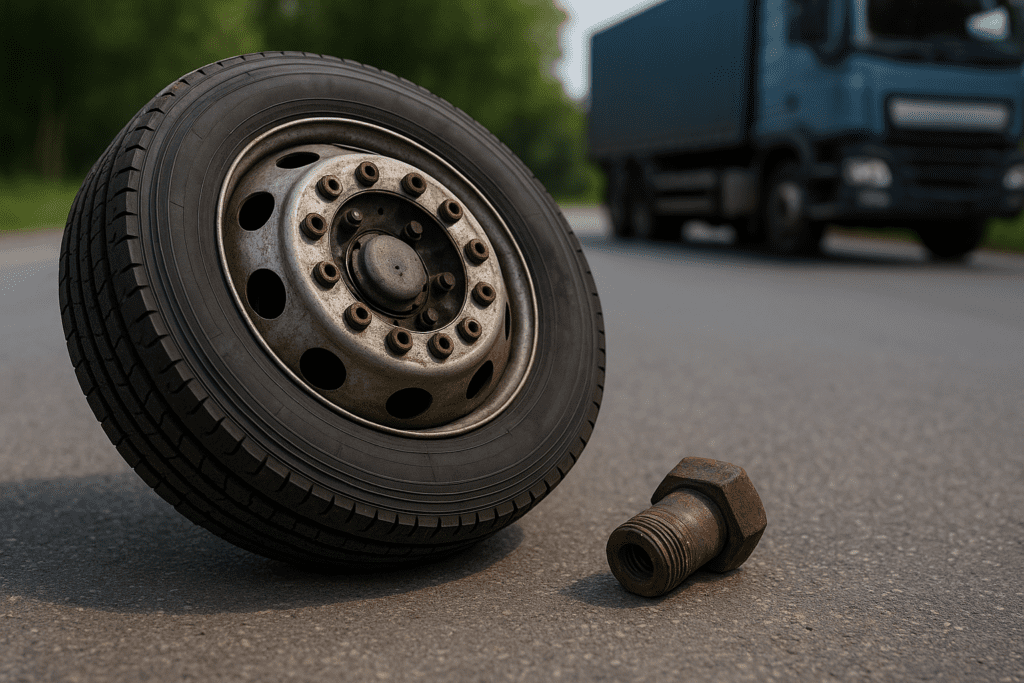
As a seasoned Transport Consultant who has been in this industry over 45 years, it still astounds me the number of operators and commercial drivers that are not aware of Wheel Torque, Wheel Re-torque or the severity and possible implications of a loose or lost wheel.
The latest available research (Transport Research Laboratory https://www.trl.co.uk/ estimated there are between 3 to 7 fatal accidents from wheel detachments per year, with a further 10 to 27 resulting in serious injuries.
Wheel security, is not a dark art, it is one of the most basic, but important parts of a vehicles safety:
There is a code of practice for refitting and tightening road wheels (Commercial vehicles: wheel maintenance https://www.gov.uk/government/publications/careless-torque-costs-lives )
There are details of wheel management in the Guide To Maintaining Roadworthiness https://www.gov.uk/government/publications/guide-to-maintaining-roadworthiness/guide-to-maintaining-roadworthiness-commercial-goods-and-passenger-carrying-vehicles
Drivers check the security of wheel fixings on their daily checks, and wheel fixings are checked on routine maintenance inspection by a qualified / competent engineer.
So how or why do wheels come loose?
The first thing to state is, wheels do not just come loose on their own, for no reason!
Investigations following loose or lost wheels normally reveal that, the wheel has recently been disturbed, removed or refitted.
The main causes of loose or lost wheels result from:
- Incorrect initial Torquing: wheels not tightened correctly after initial refitting.
- Lack of Re-torquing: wheels not retorqued after a set time or distance travelled.
- Contamination of Mating Surfaces: wheel rims or hubs not prepared correctly before refitting.
- Damaged Components: damaged components missed or refitted instead of replaced.
Prevention
Correct refitting procedure: Road wheels must be refit in a specific and clean manner, to ensure this, have a documented wheel check and refitting procedure, that is followed during wheel refitting to vehicles.
Affective and documented Torque and retorque process policy. Have a documented wheel torque and retorque process, document all wheel refitting and torquing so it can be demonstrated that manufacture specifications are being met. https://www.olmcgroup.co.uk/product/wheel-fixing-re-torque-procedure/
Ensure all wheel torque and retorques are fully and compliantly documented. https://www.olmcgroup.co.uk/product/wheel-nut-re-torque-book-duplicate-carbon-copy/
Regular wheel checks / inspection. Ensure drivers have been trained in wheel defect detection and thoroughly check for any first signs of wheel fixing movement or early signs of detachment, and any defects are recorded in writing and rectified before the vehicle returns to the road.
Driver Aids: Expecting a driver to look at a solid component (Wheel nut or fixings) and determine whether it is loose is essentially what we ask them to do each day when inspecting wheel fixings. By installing visual alignment aids, drivers have a far greater chance of identifying the early signs of wheel-fixing movement and preventing a full detachment or, at the very least, avoiding substantial and costly damage to the wheel rim and hub.
Summary
Lost and loose wheels can be avoided, lives saved, and damage costs reduced, by full and effective driver checks, robust torque and retorque recording, and, if there is a loose wheel or a full detachment, that this is robustly and professionally investigated with a corrective plan to avoid repartition, that can be implemented across your fleet.
For expert advice with wheel security, wheel torquing and retorquing contact OLMC Transport Experts and Consultants: https://www.olmcgroup.co.uk/contact-us/